Is It Normal for Children to Have Gaps Between Their Baby Teeth?
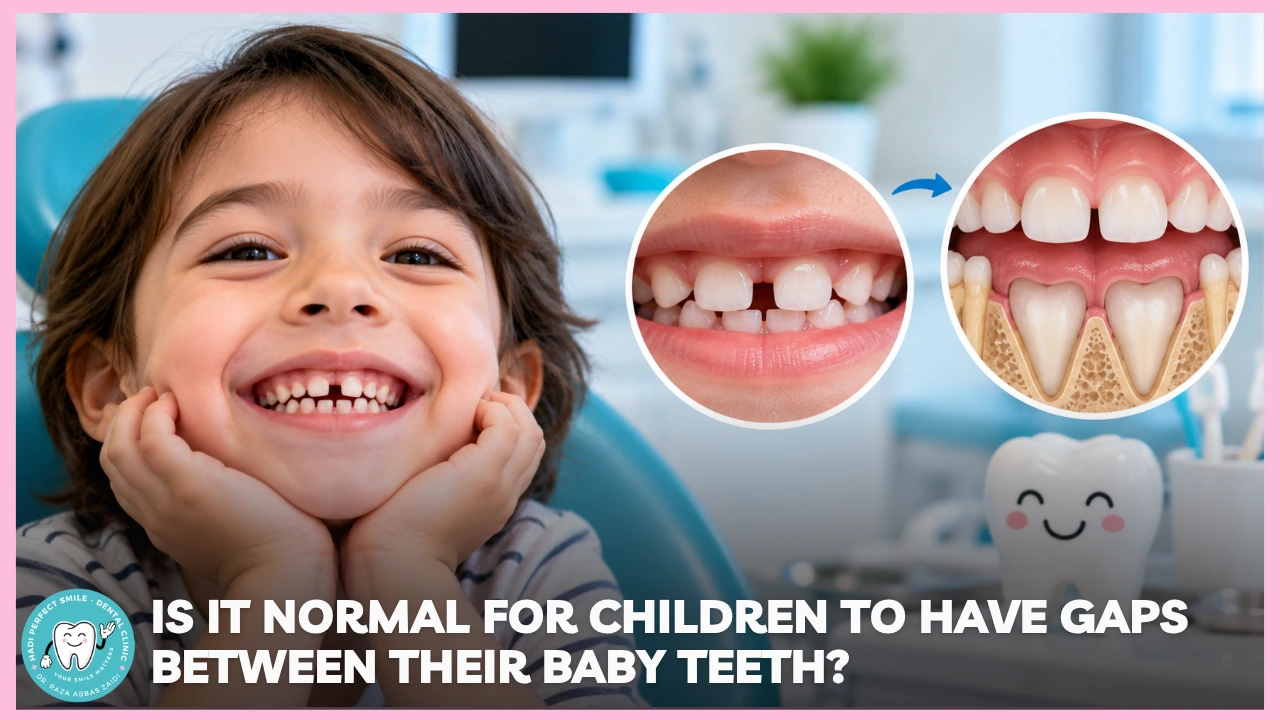
Parents often notice small spaces between their child’s teeth and immediately wonder whether something is wrong. If your child has gaps between their baby teeth, there is usually no reason to panic. In fact, gaps between baby teeth are often a normal and healthy part of dental development.
Baby teeth, also called primary or deciduous teeth, are smaller than permanent adult teeth. As a child’s jaw grows, spaces can naturally appear between the teeth. These spaces are often beneficial because the permanent teeth that eventually replace baby teeth are generally larger.
So, is it normal for children to have gaps between their baby teeth? In most cases, yes. However, the size, location, and appearance of the gaps matter, and certain types of spaces may require evaluation by a dentist.
At Hadi Perfect Smile – Dental Clinic, we regularly help parents understand their children’s changing teeth and identify whether dental development is progressing normally. Under the guidance of Dr. Raza Abbas Zaidi (Dentist & Dental Surgeon), our focus is on preventive pediatric dental care and helping parents make informed decisions about their child’s oral health.
In this article, we will explain why gaps develop between baby teeth, whether they are beneficial, when they may be a concern, and what parents should know as their child’s permanent teeth begin to appear.
Why Do Children Have Gaps Between Baby Teeth?
Gaps between baby teeth are extremely common. One of the main reasons is that children’s jaws continue to grow during early childhood.
When baby teeth first erupt, they may appear relatively close together. As the jaw becomes larger, the teeth do not necessarily grow larger along with it. Instead, additional space develops around the teeth.
This is generally a positive sign.
The space created during this period can provide room for the larger permanent teeth that will eventually replace the baby teeth.
Therefore, parents should not automatically assume that gaps mean their child has a dental problem.
Baby Teeth Are Smaller Than Permanent Teeth
One important reason for natural spacing is the difference in size between primary and permanent teeth.
Baby teeth are designed for a child’s smaller jaw and mouth. Permanent teeth are significantly larger. If baby teeth were tightly packed with no spaces at all, there might not be enough room for the larger adult teeth when they erupt.
Natural spacing can therefore be part of the mouth’s preparation for the next stage of dental development.
This is one reason dentists often view certain spaces between baby teeth as a normal feature rather than something that needs immediate correction.
What Are Spacing and Diastema?
The general term for a space between two teeth is diastema. A diastema can occur anywhere in the mouth, although parents often notice spaces between the upper front teeth.
Not every gap is the same.
Some spaces are temporary and disappear naturally as permanent teeth erupt. Others may remain because of the size or position of the teeth, the shape of the jaw, the position of the gum tissue, or certain oral habits.
A dentist can evaluate the pattern of spacing and determine whether it is part of normal development.
What Are Primate Spaces?
Some children naturally develop specific spaces called primate spaces.
These are normal spaces found between certain baby teeth. Their location differs between the upper and lower jaws, but they are particularly noticeable around the front teeth and canines.
Primate spaces are important because they help accommodate the larger permanent teeth.
They are considered a normal feature of primary dentition and generally do not require treatment simply because they are present.
What Are Developmental Spaces?
As a child grows, the jaw gradually becomes larger. The teeth may therefore become more separated, creating what are known as developmental spaces.
These spaces can be particularly useful during the transition from baby teeth to permanent teeth.
A child who has spaces between their baby teeth may actually have a favorable amount of room for permanent teeth.
This is why closing every gap in baby teeth is usually unnecessary.
Are Gaps Between Baby Teeth a Good Thing?
In many cases, yes.
Spacing between baby teeth can be beneficial because permanent teeth are larger than primary teeth. Natural gaps provide additional room for permanent teeth to erupt.
Children whose baby teeth are tightly packed may sometimes have a greater risk of crowding when their permanent teeth begin to emerge, although spacing alone cannot predict exactly how the permanent dentition will develop.
The important point for parents is that a gap does not automatically mean something is wrong.
Your dentist can monitor the child’s growth and tooth eruption over time.
What Happens When Permanent Teeth Start Coming In?
A child’s dental development changes significantly when permanent teeth begin to erupt.
As baby teeth become loose and eventually fall out, permanent teeth begin moving into their positions. The spaces that were present during the baby-tooth stage may change considerably.
Parents may notice:
- Existing gaps becoming smaller.
- New spaces appearing temporarily.
- Teeth looking slightly crooked during eruption.
- Front teeth appearing unusually large.
- Temporary overlapping of teeth.
These changes can be completely normal.
The appearance of a child’s teeth can change substantially over several years, so it is important not to judge the final alignment of permanent teeth based solely on how the baby teeth look.
What If My Child Has No Gaps Between Baby Teeth?
A lack of spacing does not automatically mean that a child will develop crowding.
Every child develops differently. Genetics, jaw growth, tooth size, eruption patterns, and other factors influence future alignment.
However, a dentist may monitor children with very tightly packed baby teeth more closely as their permanent teeth begin to erupt.
Regular dental examinations allow the dentist to track changes rather than relying on a single examination.
When Should Parents Be Concerned About Gaps?
Although many gaps are normal, certain situations deserve professional evaluation.
A dentist should examine the child if a gap:
- Appears unusually large.
- Continues to increase significantly.
- Is associated with an abnormal tooth position.
- Develops after a tooth is lost prematurely.
- Is associated with pain or swelling.
- Occurs alongside delayed tooth eruption.
- Is associated with difficulty eating or speaking.
- Appears alongside other developmental concerns.
A large gap does not necessarily mean there is a serious problem. It simply means that professional assessment can help identify the cause.
Causes of Gaps That May Need Attention
Most spaces between baby teeth are developmental, but several other factors can contribute to spacing.
Missing Teeth
A child may occasionally have a missing tooth because it never developed. This can create an unusual space.
A dental examination and, when appropriate, an X-ray can help determine whether the permanent tooth is developing underneath.
Extra Teeth
An additional tooth can interfere with normal eruption and create unusual spacing or positioning.
Oral Habits
Certain childhood habits can influence tooth position.
Thumb sucking, prolonged pacifier use, and tongue-thrusting habits may affect the developing teeth and jaws if they continue beyond the appropriate age.
Tooth Size and Jaw Size
The relationship between the size of the teeth and the size of the jaw can influence spacing.
If the teeth are relatively small compared with the available jaw space, larger gaps may develop.
Gum Tissue
The attachment of the tissue between the upper front teeth can sometimes contribute to a persistent space.
A dentist can determine whether the gum tissue is affecting tooth positioning.
Can Thumb Sucking Cause Gaps?
Thumb sucking is a common habit among babies and young children. In many cases, it is a normal self-soothing behavior.
However, prolonged or intense thumb sucking can influence the position of developing teeth and the shape of the dental arches.
Depending on the frequency and duration of the habit, children may develop changes such as an open bite or altered position of the front teeth.
Parents should discuss persistent thumb sucking with their dentist rather than attempting to stop the habit through punishment.
A supportive approach is usually more effective.
Can a Pacifier Affect Baby Teeth?
Pacifiers can also influence dental development when used frequently or for prolonged periods.
The effect depends on factors such as the child’s age, frequency of use, duration, and individual dental development.
If you have concerns about your child’s pacifier habit, discuss it with a pediatric dentist or dental professional. Early guidance can help minimize potential effects on developing teeth and jaws.
Should Gaps Between Baby Teeth Be Closed?
Usually, there is no need to close naturally occurring spaces between healthy baby teeth.
Baby teeth are temporary. Their role is not only to help children chew and speak but also to maintain space and guide the eruption of permanent teeth.
Trying to close normal developmental spaces unnecessarily may interfere with the natural transition to permanent teeth.
Treatment should only be considered when there is an identified dental or developmental reason.
Why Baby Teeth Are Important
Some parents believe baby teeth do not require much attention because they eventually fall out. This is a common misconception.
Baby teeth are important for:
- Chewing food.
- Developing clear speech.
- Supporting facial development.
- Maintaining space for permanent teeth.
- Guiding permanent teeth into the mouth.
- Supporting a child’s confidence and appearance.
Premature loss of a baby tooth can sometimes result in neighboring teeth moving into the empty space. This may reduce the room available for the permanent tooth.
For this reason, protecting baby teeth is an important part of preventive dental care.
What Parents Should Do About Gaps
If your child’s baby teeth have spaces, the best approach is usually observation and regular dental care.
Parents should make sure their child:
Brushes twice daily: Use an age-appropriate fluoride toothpaste and a suitable toothbrush.
Cleans between teeth: Once teeth touch each other, cleaning between them becomes important.
Maintains a healthy diet: Frequent sugary snacks and drinks increase the risk of tooth decay.
Visits the dentist regularly: Dental examinations allow changes in tooth eruption and jaw development to be monitored.
Avoids prolonged harmful oral habits: Discuss persistent thumb sucking, pacifier use, or other habits with your dentist.
How Early Dental Visits Help Children
A child’s first dental visit should not be delayed until there is pain or a visible problem.
Regular dental visits allow professionals to monitor:
- Tooth eruption.
- Jaw growth.
- Tooth spacing.
- Bite development.
- Oral hygiene.
- Cavities.
- Gum health.
- Oral habits.
At Hadi Perfect Smile – Dental Clinic, our approach emphasizes prevention and education. Parents can ask questions about spacing, eruption, brushing, diet, and other aspects of their child’s oral development.
Early monitoring can also help identify potential orthodontic concerns before they become more complicated.
When Might Orthodontic Evaluation Be Needed?
Not every child with gaps needs braces or orthodontic treatment.
Orthodontic evaluation may be recommended if there are concerns such as:
- Significant crowding.
- Persistent abnormal spacing.
- Teeth that fail to erupt.
- Crossbite.
- Open bite.
- Severe overbite or underbite.
- Abnormal jaw development.
- Teeth positioned unusually high or low.
The timing of orthodontic evaluation depends on the child’s individual development.
A dentist can advise parents about whether monitoring is sufficient or whether an orthodontic consultation would be helpful.
Common Myths About Gaps in Baby Teeth
Myth 1: Gaps Always Mean Something Is Wrong
Fact: Natural spacing is extremely common in children and can be beneficial for permanent teeth.
Myth 2: Every Gap Needs Braces
Fact: Most normal spaces in baby teeth do not require orthodontic treatment.
Myth 3: Closing Baby Teeth Gaps Prevents Future Problems
Fact: Baby teeth naturally change as permanent teeth erupt. Closing normal spaces is generally unnecessary.
Myth 4: Baby Teeth Don’t Matter Because They Fall Out
Fact: Baby teeth play important roles in chewing, speech, facial development, and maintaining space for permanent teeth.
Myth 5: Parents Can Predict Permanent Teeth Alignment by Looking at Baby Teeth
Fact: Dental development changes significantly as the jaws grow and permanent teeth erupt. Professional monitoring provides a much more reliable assessment.
How Hadi Perfect Smile Can Help
At Hadi Perfect Smile – Dental Clinic, we understand that parents want reassurance when they notice something unusual about their child’s teeth.
Under the care of Dr. Raza Abbas Zaidi (Dentist & Dental Surgeon), our dental team can assess your child’s teeth and gums, monitor dental development, and identify any issues that may require attention.
Our preventive approach includes comprehensive dental examinations, oral hygiene guidance, cavity prevention, evaluation of tooth eruption, and advice regarding developing bite and spacing.
Rather than treating every gap as a problem, we focus on understanding why the space exists and whether it is appropriate for the child’s stage of development.
Clinic Details
📍 Address:
J-3/100-A, J- Extension, Near Anar Wali Masjid, Laxmi Nagar, Delhi – 110092
📞 Call Us:
+91-7011690245
📧 Email:
contact@hadiperfectsmile.in
🌐 Website:
www.hadiperfectsmile.in
Final Thoughts
So, is it normal for children to have gaps between their baby teeth? In most cases, yes. Spacing between primary teeth is often a natural part of childhood dental development and can provide valuable room for larger permanent teeth.
However, not every gap has the same cause. Unusual spacing, missing teeth, persistent oral habits, abnormal eruption, or other dental concerns may require professional evaluation.
Parents should avoid trying to close natural spaces without first consulting a dentist. Instead, focus on good oral hygiene, a healthy diet, regular dental checkups, and monitoring your child’s dental development.
At Hadi Perfect Smile – Dental Clinic, we are committed to helping parents understand every stage of their child’s oral development and providing timely, preventive dental care when needed.
Remember, a gap today does not necessarily mean a problem tomorrow.
Your Smile Matters.