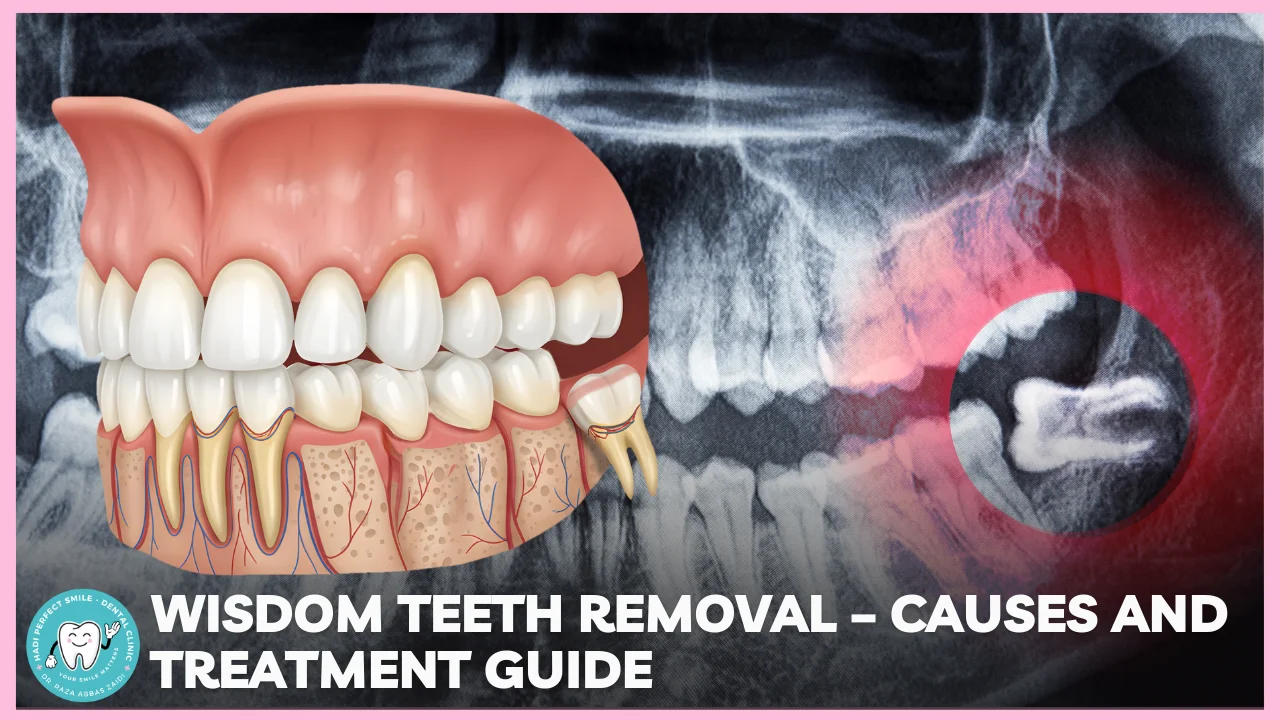
Wisdom Teeth: When Should They Be Removed?
Wisdom teeth, also known as third molars, are the last set of teeth to appear in the mouth. Most people develop them between the ages of 17 and 25, a stage of life traditionally associated with maturity—hence the name “wisdom teeth.” While some people experience no issues when their wisdom teeth erupt, many others face problems such as pain, swelling, infection, or crowding.
Because wisdom teeth often grow in a limited space at the back of the mouth, they can become impacted or grow at awkward angles. When this happens, dentists may recommend removing them to prevent future complications.
At Hadi Perfect Smile – Dental Clinic, Laxmi Nagar, Delhi, we frequently evaluate patients with wisdom tooth concerns. Under the care of Dr. Raza Abbas Zaidi (Dentist & Dental Surgeon), we provide expert guidance and treatment options to ensure the best outcome for each patient.
This comprehensive guide explains what wisdom teeth are, why they sometimes need removal, symptoms to watch for, and when extraction becomes necessary.
What Are Wisdom Teeth?
Wisdom teeth are the third and final set of molars located at the very back of the mouth. Most adults develop four wisdom teeth—two in the upper jaw and two in the lower jaw.
However, not everyone has all four wisdom teeth. Some people may have:
- Only one or two wisdom teeth
- None at all
- Extra molars (rare cases)
In the past, when human diets consisted of harder, more fibrous foods, these extra molars helped with chewing. Today, with softer diets and smaller jaw structures, wisdom teeth are often unnecessary and may cause problems.
Why Do Wisdom Teeth Cause Problems?
One of the main reasons wisdom teeth cause issues is lack of space in the jaw. Modern human jaws are generally smaller than those of our ancestors, leaving insufficient room for additional molars.
When wisdom teeth try to erupt in limited space, they may:
- Grow sideways
- Become trapped in the jawbone
- Partially emerge through the gums
- Push against nearby teeth
These situations can lead to pain, infection, and other dental complications.
What Are Impacted Wisdom Teeth?
An impacted wisdom tooth is one that cannot fully emerge through the gums due to obstruction from bone, gum tissue, or neighboring teeth.
There are several types of wisdom tooth impaction:
1. Horizontal Impaction
The tooth grows sideways toward the neighboring molar.
2. Vertical Impaction
The tooth grows normally but remains trapped in the jawbone.
3. Mesial Impaction
The tooth tilts forward toward the front of the mouth.
4. Distal Impaction
The tooth tilts backward toward the back of the jaw.
Impacted wisdom teeth often require surgical removal.
Signs That Wisdom Teeth May Need Removal
Not all wisdom teeth need to be removed. However, certain symptoms indicate that extraction may be necessary.
1. Persistent Pain or Discomfort
Pain at the back of the mouth is a common sign of wisdom tooth problems.
2. Swollen or Red Gums
Inflammation around the wisdom tooth area may indicate infection.
3. Difficulty Opening the Mouth
Jaw stiffness can occur when wisdom teeth irritate surrounding tissues.
4. Bad Breath or Unpleasant Taste
Partially erupted wisdom teeth trap food particles and bacteria.
5. Headaches or Jaw Pain
Pressure from impacted teeth can cause discomfort in nearby areas.
6. Crowding of Other Teeth
Wisdom teeth may push against adjacent molars, causing misalignment.
If you experience any of these symptoms, a dental examination is recommended.
When Should Wisdom Teeth Be Removed?
Dentists may recommend removing wisdom teeth when they cause or are likely to cause problems.
Removal Is Recommended When:
- Wisdom teeth are impacted
- They cause pain or infection
- They lead to tooth decay or gum disease
- They damage neighboring teeth
- They contribute to crowding or bite problems
In some cases, dentists may also recommend preventive removal to avoid complications later.
At Hadi Perfect Smile, we carefully assess each patient’s situation before recommending extraction.
Risks of Not Removing Problematic Wisdom Teeth
Ignoring problematic wisdom teeth can lead to several complications:
Tooth Decay
Wisdom teeth are difficult to clean, making them more prone to cavities.
Gum Disease
Inflammation and infection may develop around partially erupted teeth.
Damage to Adjacent Teeth
Pressure from wisdom teeth can harm neighboring molars.
Cysts or Tumors
In rare cases, impacted wisdom teeth may lead to cyst formation.
Jaw Pain and Bite Problems
Misaligned wisdom teeth can disrupt normal chewing.
Diagnosis of Wisdom Tooth Problems
Dentists typically diagnose wisdom tooth issues through:
- Clinical examination
- Dental X-rays
- Assessment of symptoms
X-rays help determine the position of the wisdom teeth and whether they are impacted.
At Hadi Perfect Smile Dental Clinic, advanced diagnostic tools help ensure accurate evaluation and treatment planning.
What Happens During Wisdom Tooth Removal?
Wisdom tooth removal is a common dental procedure performed under local anesthesia.
Step-by-Step Process
- Numbing the Area
Local anesthesia ensures the procedure is painless. - Accessing the Tooth
The dentist may make a small incision in the gum if the tooth is impacted. - Removing the Tooth
The tooth may be removed in sections for easier extraction. - Cleaning the Area
The site is cleaned to prevent infection. - Stitching the Gum
Sutures may be placed to help healing.
The entire procedure typically takes 30–60 minutes depending on complexity.
Recovery After Wisdom Tooth Extraction
Most patients recover within a few days to a week.
Recovery Tips
- Rest for the first 24 hours
- Apply ice packs to reduce swelling
- Avoid hard or spicy foods
- Maintain gentle oral hygiene
- Follow dentist instructions carefully
Proper care ensures faster healing and reduces complications.
Possible Complications After Removal
While wisdom tooth removal is generally safe, minor complications can occur.
Dry Socket
Occurs when the blood clot protecting the extraction site becomes dislodged.
Swelling or Bruising
Common but temporary.
Mild Bleeding
Usually stops within a few hours.
Prompt follow-up with your dentist ensures quick management if any issues arise.
Can Wisdom Teeth Be Left Untreated?
If wisdom teeth:
- Grow normally
- Are fully erupted
- Do not cause pain or infection
- Can be cleaned properly
then removal may not be necessary.
Regular dental checkups help monitor their condition.
Wisdom Teeth and Orthodontics
Wisdom teeth can sometimes interfere with orthodontic treatment.
For patients undergoing braces or aligner therapy, dentists may recommend removing wisdom teeth to prevent crowding or relapse after treatment.
Why Choose Hadi Perfect Smile for Wisdom Tooth Evaluation?
At Hadi Perfect Smile – Dental Clinic, we provide comprehensive dental care focused on patient comfort and long-term oral health.
Under Dr. Raza Abbas Zaidi, our clinic offers:
- Accurate diagnosis of wisdom tooth problems
- Safe and comfortable extraction procedures
- Personalized treatment planning
- Post-treatment care guidance
- Modern dental equipment and techniques
Our goal is to ensure that patients receive the most appropriate care with minimal discomfort.
Clinic Details
📍 Address:
J-3/100-A, J- Extension, Near Anar Wali Masjid, Laxmi Nagar, Delhi – 110092
📞 Call Us:
+91-7011690245
📧 Email:
contact@hadiperfectsmile.in
🌐 Website:
www.hadiperfectsmile.in
Final Thoughts
Wisdom teeth are a natural part of dental development, but they do not always grow without complications. Understanding the warning signs and seeking timely dental evaluation can prevent pain, infection, and long-term oral health problems.
If you experience discomfort at the back of your mouth or suspect wisdom tooth issues, consulting a qualified dentist is the best step.
At Hadi Perfect Smile Dental Clinic, we are dedicated to helping patients maintain healthy smiles through expert diagnosis, preventive care, and effective treatment.
Your comfort, health, and smile always come first.