🦷 The Impact of Smoking and Vaping on Oral Health: A Complete Dental Guide
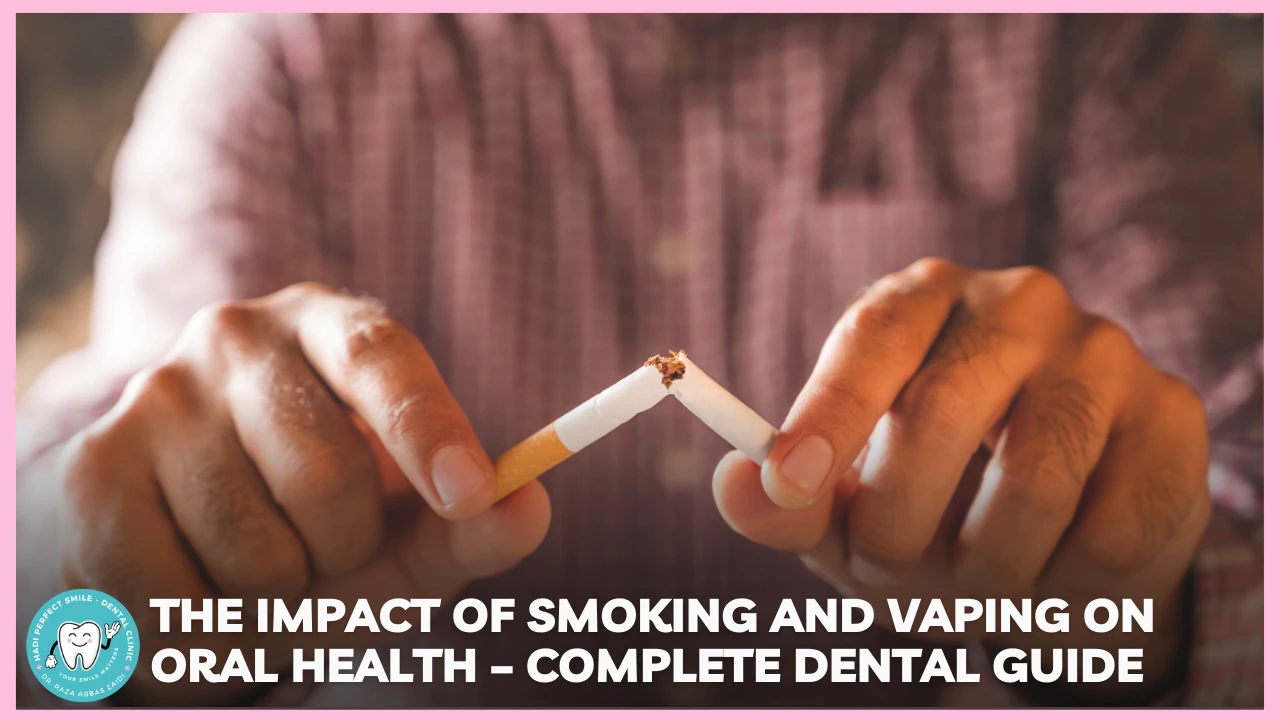
Smoking has long been known to damage oral health, but in recent years, vaping has become a growing concern—especially among teenagers and young adults. Marketed as a “safer alternative,” vaping has been widely adopted, yet research continues to show that it poses serious risks to teeth, gums, and overall oral hygiene.
Whether you smoke cigarettes, use bidis, hookah, cigars, or vape flavored e-liquids, the effects on oral health can be severe and long-lasting. This 2000-word comprehensive guide explains the dangers of smoking and vaping, how each affects the mouth, the symptoms to look for, and what steps you can take to protect your oral health.
⭐ Why Smoking and Vaping Harm Oral Health
The mouth is the first point of contact for the chemicals in tobacco smoke and vape aerosols. These substances affect:
- Teeth
- Gums
- Tongue
- Oral tissues
- Salivary glands
- Bone health
- Healing ability
Both smoking and vaping introduce toxins, irritants, and heat, causing inflammation, dryness, infection, and long-term tissue damage.
🚬 The Oral Health Risks of Smoking
Smoking exposes the mouth to more than 7,000 harmful chemicals, including nicotine, tar, lead, arsenic, and carcinogens.
Here are the major ways smoking impacts your oral health:
1️⃣ Severe Gum Disease (Periodontitis)
Smoking is the number one preventable cause of gum disease. It weakens gum tissues, reduces blood flow, and promotes bacterial growth.
Effects include:
- Red, swollen gums
- Persistent bleeding
- Gum recession
- Loose or shifting teeth
- Bone loss
Smokers are 2–7 times more likely to develop periodontitis.
2️⃣ Tooth Loss
Due to bone loss and gum damage, smokers lose teeth at twice the rate of non-smokers. Severe gum disease is the most common cause.
3️⃣ Bad Breath (Halitosis)
Tobacco dries the mouth and leaves behind strong odors. The chemicals irritate oral tissues and reduce saliva, making bad breath chronic.
4️⃣ Tooth Staining & Discoloration
Tar and nicotine quickly stain enamel, turning teeth:
- Yellow
- Brown
- Darkened
These stains become stubborn over time and often need professional whitening.
5️⃣ Slow Healing After Dental Procedures
Smoking reduces oxygen and blood flow, causing delayed healing after:
- Extractions
- Implants
- Gum surgery
- Root canal treatment
This increases the risk of complications such as infection and dry socket.
6️⃣ Higher Risk of Oral Cancer
Smoking is responsible for more than 85% of oral cancer cases. It increases the risk of:
- Mouth cancer
- Tongue cancer
- Throat cancer
- Lip cancer
Early symptoms include non-healing ulcers, lumps, and persistent pain.
7️⃣ Increased Plaque and Tartar
Nicotine promotes plaque buildup, which hardens into calculus (tartar), increasing the risk of decay and gum disease.
8️⃣ Reduced Ability to Taste and Smell
Smoking damages taste buds and affects sensory nerves, reducing the sensitivity of flavors and smells.
9️⃣ Dry Mouth (Xerostomia)
Dry mouth increases the risk of:
- Cavities
- Gum disease
- Burning mouth
- Mouth infections
Saliva helps protect teeth—but smoking reduces saliva flow.
💨 The Oral Health Risks of Vaping
Vaping is often marketed as a safer alternative to smoking, but scientific evidence shows that vaping also harms the mouth, just differently.
Vape aerosols contain nicotine, propylene glycol, glycerin, flavoring agents, and heavy metals—all harmful to oral tissues.
1️⃣ Nicotine: Still Dangerous in Vapes
Even without smoke, nicotine causes:
- Gum recession
- Restricted blood flow
- Increased risk of gum disease
- Tooth grinding and jaw pain
- Reduced healing ability
Nicotine is harmful whether inhaled through smoke or vapor.
2️⃣ Dry Mouth From Vaping Ingredients
Propylene glycol, found in vape liquids, absorbs moisture and leads to:
- Dry mouth
- Increased cavities
- Throat irritation
Dry mouth creates a perfect environment for bacteria to multiply.
3️⃣ Increased Cavities Due to Sweet Flavorings
Many vape liquids contain sugary flavorings like:
- Fruit
- Candy
- Mint
- Chocolate
Vaping these flavors increases the acidity of saliva and leads to enamel erosion.
4️⃣ Vaper’s Tongue
A temporary condition causing loss of taste due to flavor overload and dryness.
5️⃣ Gum Inflammation and Irritation
Studies show that vaping causes inflammation of gum tissues, leading to:
- Swelling
- Bleeding
- Discomfort
This can progress to periodontitis over time.
6️⃣ Enamel Damage Due to Heat and Chemicals
The aerosol produced by vaping contains heavy metals such as:
- Nickel
- Chromium
- Lead
These can settle on tooth surfaces and wear away enamel.
7️⃣ Risk of Oral Lesions
Vaping causes trauma and irritation, leading to:
- Ulcers
- White patches
- Leukoplakia-like lesions
📌 Smoking vs. Vaping: Which Is Worse for Oral Health?
Both are harmful—but in different ways.
| Aspect | Smoking | Vaping |
|---|---|---|
| Gum Disease | Very High Risk | High Risk |
| Tooth Staining | Severe | Mild |
| Oral Cancer | Very High | Lower, but still possible |
| Dry Mouth | High | High |
| Tooth Loss | High | Moderate |
| Sensitivity | Moderate | High |
| Enamel Damage | Moderate | High (due to acids & metals) |
Conclusion:
➡️ Smoking is generally worse overall.
➡️ Vaping has fewer carcinogens but still causes significant oral damage—especially in young users.
🤕 How Smoking & Vaping Cause Tooth Decay
Both habits increase the risk of dental caries because they:
- Reduce saliva
- Increase plaque
- Promote harmful bacteria
- Cause gum recession (exposing roots)
- Lead to sugary cravings
- Affect pH levels in the mouth
This combination leads to rapid tooth decay.
🔎 Early Signs of Damage from Smoking or Vaping
Look out for:
- Bleeding gums
- Bad breath
- White or red patches
- Loose teeth
- Yellow/brown stains
- Dry mouth
- Pain while chewing
- Sensitivity
- Mouth sores
- Persistent cough
If any symptoms appear, seek dental care immediately.
🦷 How Dentists Treat Damage from Smoking or Vaping
Depending on severity, treatments may include:
✔ Scaling and Deep Cleaning (SRP)
To remove plaque and tartar from deep pockets.
✔ Gum Treatment
For moderate or severe gum disease.
✔ Tooth Whitening
To remove tobacco stains.
✔ Fluoride Treatments
To strengthen enamel.
✔ Fillings or Crowns
For cavities or weakened teeth.
✔ Mouth Ulcer Treatment
For recurring sores or lesions.
✔ Root Canal Treatment
If decay or infection reaches the pulp.
✔ Oral Cancer Screening
Essential for all smokers.
✔ Dental Implants or Bridges
If tooth loss occurs.
🛑 Preventing Oral Health Damage from Smoking and Vaping
Even if quitting is difficult, you can still minimize harm.
✔ 1. Brush Twice Daily with Fluoride Toothpaste
Helps repair early enamel damage.
✔ 2. Floss Every Day
Prevents gum disease.
✔ 3. Drink More Water
Reduces dryness and bacterial growth.
✔ 4. Use an Antibacterial Mouthwash
Helps reduce gum inflammation.
✔ 5. Avoid Sugary Vapes and Tobacco
They increase cavity risk.
✔ 6. Get Professional Cleanings Every 6 Months
Smokers and vapers often need more frequent cleanings.
✔ 7. Rinse Mouth After Smoking or Vaping
Even water helps reduce chemical impact.
✔ 8. Use Saliva-Stimulating Products
Like sugar-free gum or xylitol mints.
🚭 The Best Prevention: Quitting Smoking or Vaping
Quitting has immediate and long-term benefits:
- Fresher breath
- Healthier gums
- Stronger immune response
- Faster healing
- Reduced oral cancer risk
- Improved taste and smell
- Less staining
Dentists strongly recommend quitting as the most effective way to protect your mouth.
🧠 Why Do Young People Think Vaping Is Safe?
Marketing and social influence play a major role:
- Attractive flavors
- Trendy devices
- Misleading “smoke-free” label
- Perceived as harmless
- Used for stress relief
However, vaping still contains nicotine, toxins, heavy metals, and irritants—making it dangerous, especially for adolescence.
⭐ Conclusion: Smoking and Vaping Are Both Harmful to Oral Health
The evidence is clear:
Smoking and vaping both have serious, long-term consequences on oral health. They damage the teeth, gums, tongue, bone, and oral tissues. While vaping may seem less harmful, it still causes dry mouth, enamel erosion, inflammation, and higher risk of cavities.
The best protection is to quit. But even if you can’t quit immediately, adopting good oral hygiene practices and getting regular dental check-ups can help minimize the damage.
Your smile is precious—protect it.