One of the biggest reasons people delay dental treatment is fear. Among all dental procedures, root canal treatment is perhaps the most misunderstood. Many patients believe it is extremely painful, leading them to postpone treatment until the pain becomes unbearable. The truth is that modern dentistry has transformed root canal treatment into a safe, comfortable, and highly successful procedure.
If you have ever asked yourself, “Is Root Canal Painful?”, you are not alone. It is one of the most frequently searched dental questions on the internet. The reality is that a root canal is performed to relieve pain, not to cause it. Advances in dental technology, effective local anesthesia, and improved treatment techniques have made the procedure far more comfortable than many people expect.
At Hadi Perfect Smile – Dental Clinic, we understand that anxiety about dental procedures is common. Under the expert care of Dr. Raza Abbas Zaidi (Dentist & Dental Surgeon), our team focuses on gentle, patient-centered treatment to ensure every root canal procedure is as comfortable and stress-free as possible.
In this comprehensive guide, we answer the question “Is Root Canal Painful?”, explain why root canal treatment is needed, describe the procedure, discuss recovery, and share tips for maintaining healthy teeth after treatment.
What Is a Root Canal?
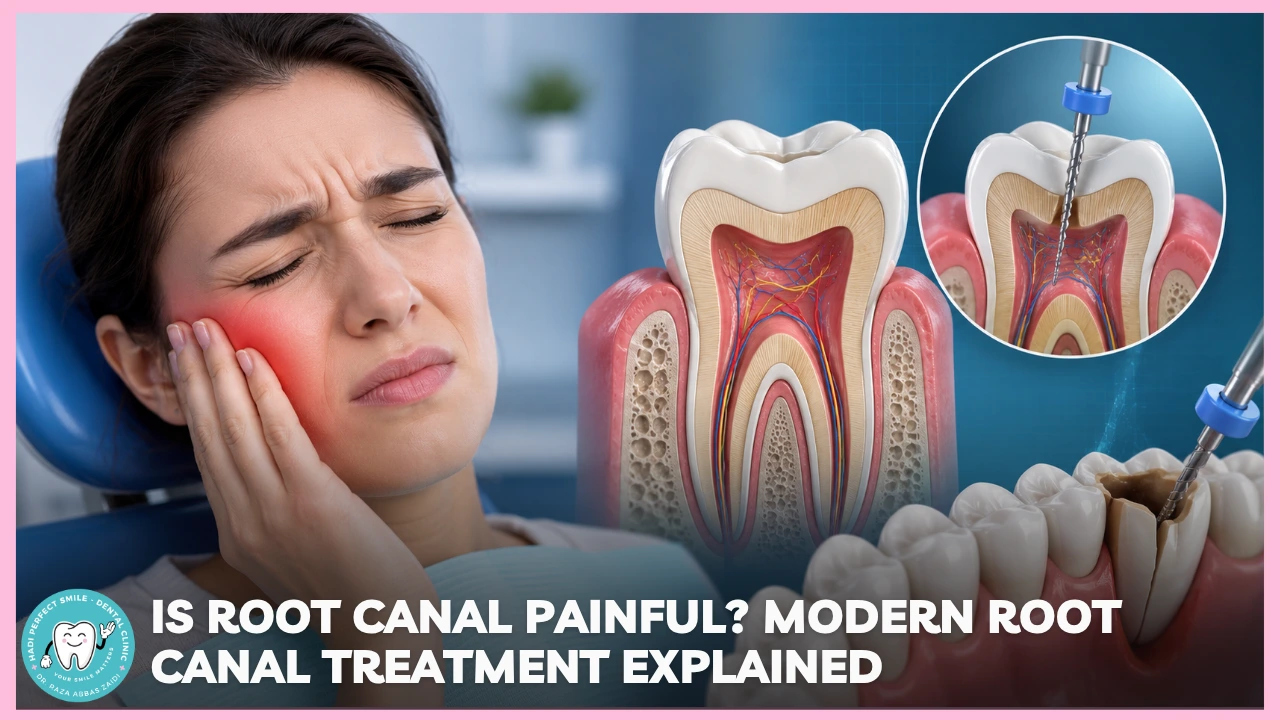
A root canal is a dental procedure used to treat infection or damage inside a tooth. The inner part of the tooth contains soft tissue called the dental pulp, which includes nerves, blood vessels, and connective tissue. When this pulp becomes infected or inflamed due to deep tooth decay, cracks, repeated dental procedures, or trauma, it can cause severe pain.
During a root canal procedure, the infected pulp is carefully removed. The inside of the tooth is then cleaned, disinfected, shaped, and sealed to prevent future infection. In many cases, a dental crown is placed afterward to restore strength and protect the treated tooth.
The primary goal of root canal treatment is to save the natural tooth while eliminating infection and relieving pain.
Why Do People Need a Root Canal?
A dentist may recommend a root canal when the pulp inside the tooth is infected or irreversibly damaged.
Common reasons include:
- Deep tooth decay
- Untreated cavities
- Cracked or fractured teeth
- Trauma to the tooth
- Repeated dental procedures on the same tooth
- Severe tooth infection (abscess)
Without treatment, the infection can spread to the surrounding bone and gums, causing more pain and potentially leading to tooth loss.
Is Root Canal Painful?
The simple answer is No.
Modern root canal treatment is performed under local anesthesia, which numbs the tooth and surrounding tissues. Most patients report that the procedure feels similar to getting a routine dental filling.
The pain people often associate with root canals usually comes from the infection itself, not from the treatment. In fact, a root canal removes the infected tissue that is causing discomfort.
At Hadi Perfect Smile Dental Clinic, patient comfort is our priority. We use modern techniques and effective anesthesia to ensure a comfortable experience throughout the procedure.
Why Do People Think Root Canals Are Painful?
The belief that root canals are painful dates back many years when dental techniques and anesthesia were not as advanced as they are today.
Today, improvements in:
- Local anesthetics
- Digital X-rays
- Precision instruments
- Rotary endodontic systems
- Modern infection control
have made the procedure much faster, safer, and more comfortable.
Many patients are pleasantly surprised by how little discomfort they experience.
Signs You May Need a Root Canal
Not every toothache requires a root canal, but certain symptoms should never be ignored.
Common warning signs include:
Persistent Toothache
A constant, throbbing pain that does not go away may indicate pulp infection.
Sensitivity to Hot and Cold
Lingering sensitivity after consuming hot or cold foods often suggests nerve damage.
Pain While Chewing
Pain when biting may indicate infection or inflammation inside the tooth.
Swollen Gums
Swelling near the affected tooth may indicate an abscess.
Tooth Discoloration
A tooth that becomes gray or dark may have damaged pulp tissue.
Pimple on the Gum
A small bump that drains pus near the tooth is a common sign of dental infection.
If you experience these symptoms, early treatment can help save the tooth.
What Happens During a Root Canal Procedure?
Understanding each step can reduce anxiety and help patients feel more confident.
Step 1: Examination
The dentist examines the tooth and takes digital X-rays to assess the infection.
Step 2: Local Anesthesia
The treatment area is completely numbed to ensure patient comfort.
Most patients feel only slight pressure during the procedure.
Step 3: Isolation
A rubber dam is placed around the tooth to keep it clean and dry.
Step 4: Access Opening
A small opening is created in the tooth to reach the infected pulp.
Step 5: Cleaning the Root Canals
The infected pulp is removed, and the canals are thoroughly cleaned and disinfected.
Step 6: Filling the Canals
The cleaned canals are sealed with a biocompatible material to prevent reinfection.
Step 7: Tooth Restoration
Depending on the amount of remaining tooth structure, a permanent filling or dental crown is placed to restore function and strength.
Will I Feel Pain During the Procedure?
Most patients experience:
- Pressure
- Mild vibration
- Water spray
- Instrument movement
However, they should not experience sharp pain.
If discomfort occurs during treatment, additional anesthesia can be administered immediately.
Communication with your dentist is important throughout the procedure.
What Happens After a Root Canal?
Some mild tenderness is normal after treatment because the surrounding tissues may remain slightly inflamed.
Most patients experience:
- Mild soreness
- Slight tenderness when chewing
- Temporary sensitivity
These symptoms usually improve within a few days and can often be managed with over-the-counter pain medication if recommended by your dentist.
Recovery Tips After a Root Canal
Following proper aftercare helps ensure a smooth recovery.
Avoid Chewing on the Treated Tooth
Until the permanent restoration is completed, avoid chewing hard foods on the treated side.
Maintain Good Oral Hygiene
Continue brushing and flossing gently around the treated tooth.
Take Prescribed Medications
If antibiotics or pain relievers are prescribed, take them exactly as directed.
Attend Follow-Up Appointments
If a crown is recommended, do not delay placement. Crowns help protect root canal-treated teeth from fracture.
Benefits of Root Canal Treatment
Choosing a root canal instead of extraction offers several advantages.
Preserves Your Natural Tooth
Saving your natural tooth helps maintain proper chewing function and bite alignment.
Eliminates Pain
Root canal treatment removes the infected pulp, relieving the pain caused by infection.
Prevents Infection from Spreading
Treating the infection early protects surrounding teeth, gums, and bone.
Restores Normal Function
After restoration with a crown or filling, the tooth functions much like a healthy natural tooth.
Cost-Effective Long Term
Saving a natural tooth is often more affordable than extraction followed by replacement with a bridge or implant.
What Happens If You Avoid a Root Canal?
Delaying treatment can lead to serious complications.
Possible consequences include:
- Severe toothache
- Dental abscess
- Swelling of the face
- Bone destruction
- Spread of infection
- Tooth loss
Ignoring symptoms rarely solves the problem. The infection typically worsens over time.
Common Myths About Root Canal Treatment
Myth 1: Root Canals Are Extremely Painful
Modern root canal treatment is designed to relieve pain, not cause it.
Myth 2: Tooth Extraction Is Better
Whenever possible, preserving the natural tooth is the preferred option.
Myth 3: Root Canal Treatment Causes Illness
There is no scientific evidence supporting this outdated myth. Root canal treatment is considered a safe and effective dental procedure.
Myth 4: One Visit Is Always Enough
Some teeth require multiple appointments depending on the severity of infection.
How to Prevent Needing a Root Canal
Many root canals can be avoided through preventive dental care.
Helpful habits include:
- Brush twice daily with fluoride toothpaste.
- Floss every day.
- Limit sugary foods and beverages.
- Visit your dentist every six months.
- Treat cavities early.
- Wear a mouthguard during sports.
- Avoid using your teeth to open packages.
Regular dental checkups allow problems to be detected before they reach the pulp.
Why Choose Hadi Perfect Smile for Root Canal Treatment?
At Hadi Perfect Smile – Dental Clinic, we are committed to providing gentle, high-quality dental care using modern technology and evidence-based techniques.
Under the expert care of Dr. Raza Abbas Zaidi, we offer:
- Comprehensive dental examinations
- Digital dental X-rays
- Comfortable root canal treatment
- Tooth-colored restorations
- Dental crowns
- Emergency dental care
- Personalized treatment plans
Our goal is to relieve pain, preserve natural teeth, and restore healthy smiles in a comfortable environment.
Clinic Details
📍 Address:
J-3/100-A, J- Extension, Near Anar Wali Masjid, Laxmi Nagar, Delhi – 110092
📞 Call Us:
+91-7011690245
📧 Email:
contact@hadiperfectsmile.in
🌐 Website:
www.hadiperfectsmile.in
Final Thoughts
If you have been wondering “Is Root Canal Painful?”, the answer is reassuring. Thanks to modern dental techniques and effective anesthesia, root canal treatment is generally no more uncomfortable than getting a routine filling. The procedure is performed to remove infection, relieve pain, and save your natural tooth.
Delaying treatment out of fear can allow the infection to worsen, leading to more pain and more complex dental procedures. Seeking treatment early improves comfort, increases the chances of saving the tooth, and protects your long-term oral health.
At Hadi Perfect Smile Dental Clinic, we are dedicated to providing compassionate, comfortable, and advanced dental care. If you are experiencing tooth pain or think you may need a root canal, our experienced team is here to help you regain a healthy, pain-free smile.
Your Smile Matters.