Introduction
Tooth extraction is a common dental procedure, but sometimes complications can arise. One of the most painful and concerning issues after a tooth removal is a condition known as dry socket. If not treated promptly, dry socket can lead to severe discomfort and delayed healing. At Hadi Perfect Smile – Dental Clinic, we educate and treat patients to manage and prevent dry socket effectively.
What is Dry Socket?
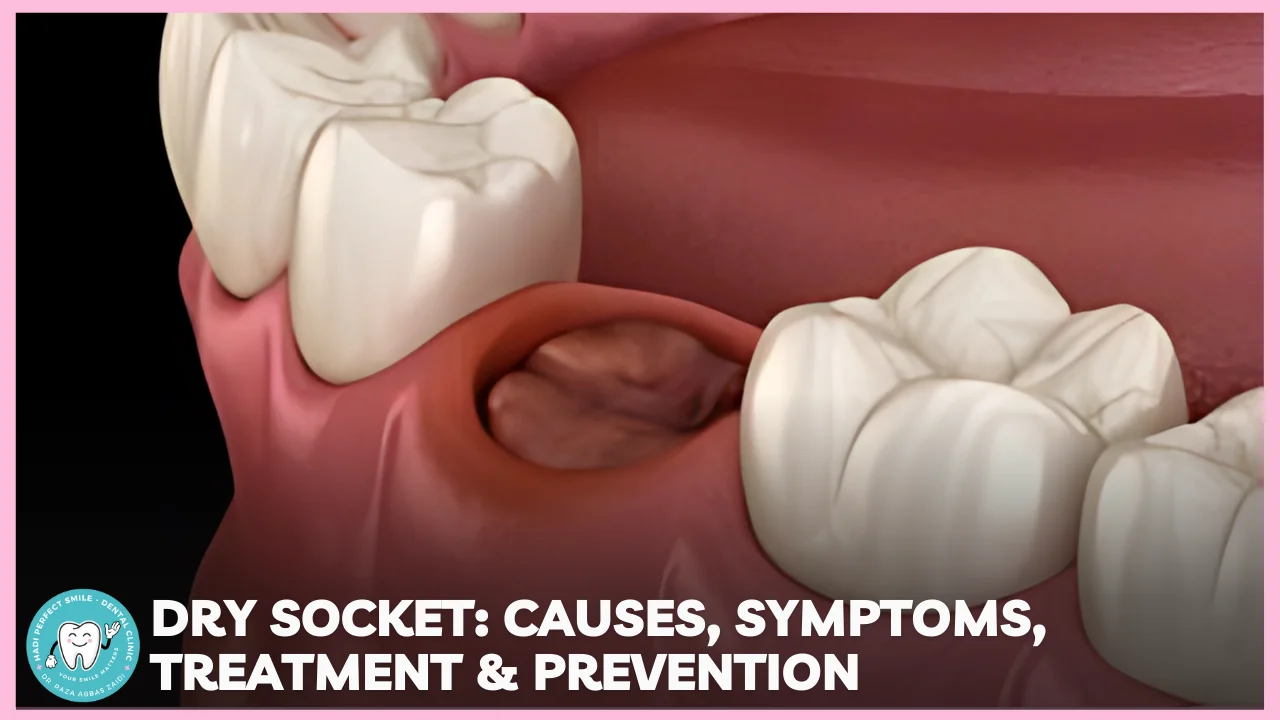
Dry socket, or alveolar osteitis, is a painful dental condition that occurs when the blood clot at the site of a tooth extraction fails to develop, dislodges, or dissolves prematurely. This clot plays a vital role in protecting the bone and nerves underneath. Without it, the bone and nerve endings are exposed, leading to intense pain and potential infection.
Dry socket usually develops 1 to 3 days after a tooth extraction, especially with wisdom teeth removals.
Causes of Dry Socket
Several factors can contribute to the development of dry socket, including:
- Improper Oral Hygiene: Failing to keep the extraction site clean can cause the clot to dislodge.
- Smoking or Tobacco Use: Chemicals in tobacco interfere with healing and can cause clot breakdown.
- Suction Actions: Using straws or forceful spitting may dislodge the clot.
- Previous Dry Socket Experience: A history of dry socket increases the likelihood of recurrence.
- Oral Contraceptives: High estrogen levels may affect clot stability.
- Traumatic Extraction: Surgical difficulty or excessive force during extraction can affect healing.
Symptoms of Dry Socket
The main symptoms of dry socket include:
- Severe Pain at the extraction site, often radiating to the ear, eye, neck, or temple.
- Visible Bone in the socket.
- Foul Smell or Taste in the mouth.
- Delayed Healing or exposed bone where the tooth was removed.
- Swollen Lymph Nodes in the jaw or neck (in some cases).
Pain typically begins a few days after the tooth is removed and may worsen without treatment.
Who Is at Risk?
Certain individuals are at higher risk of developing dry socket:
- Smokers
- Women taking oral contraceptives
- Those with poor oral hygiene
- Patients who had difficult extractions or impacted teeth
- Individuals with previous dry socket history
How is Dry Socket Diagnosed?
At Hadi Perfect Smile – Dental Clinic, our dentists diagnose dry socket based on:
- Patient’s symptoms
- Visual examination of the socket
- History of recent tooth extraction
- Absence of blood clot in the socket
X-rays may be taken to rule out other complications such as bone infections or fragments.
Treatment for Dry Socket
Dry socket requires prompt treatment to relieve pain and promote healing. Here’s how it is typically managed:
1. Cleaning the Socket
The dentist will gently flush the socket to remove debris or food particles that may cause irritation or infection.
2. Medicated Dressings
A dressing soaked in antiseptic or analgesic solution is placed in the socket to relieve pain. This dressing may need to be changed every few days until healing progresses.
3. Pain Management
Over-the-counter pain relievers such as ibuprofen or prescribed medications are used to control discomfort.
4. Antibiotics
If there’s evidence of infection, a course of antibiotics may be prescribed.
5. Self-Care Instructions
Patients are advised to maintain oral hygiene and avoid activities that may dislodge the clot, like smoking or using straws.
Prevention Tips for Dry Socket
Preventing dry socket is key to ensuring a smooth recovery after tooth extraction. Follow these preventive steps:
- Avoid Smoking or Tobacco for at least 72 hours post-extraction.
- Don’t Use Straws or rinse forcefully for the first 24-48 hours.
- Follow Post-Op Instructions given by your dentist strictly.
- Eat Soft Foods and avoid hard, crunchy, or spicy items for a few days.
- Keep the Area Clean by gently rinsing with warm salt water after 24 hours.
- Inform Your Dentist about any medical conditions or medications beforehand.
Why Choose Hadi Perfect Smile – Dental Clinic for Post-Extraction Care?
At Hadi Perfect Smile – Dental Clinic, your comfort and health are our priorities. Here’s why patients trust us:
- Experienced Dentists: Skilled in handling extractions and post-operative care.
- Advanced Technology: Digital imaging and modern tools for accurate diagnosis and healing.
- Patient-Centered Approach: We educate our patients and offer personalized care plans.
- Emergency Support: Immediate attention for complications like dry socket.
FAQs About Dry Socket
1. Is dry socket dangerous?
While not life-threatening, it is painful and can delay healing. Prompt treatment prevents complications.
2. Can dry socket heal on its own?
Mild cases may heal gradually, but professional care ensures faster and less painful recovery.
3. How long does it take to recover from dry socket?
With proper care, symptoms improve within 3–5 days. Full healing may take 1–2 weeks.
4. Is dry socket common after wisdom tooth extraction?
Yes, especially in lower wisdom teeth due to complex extraction and jawbone exposure.
Conclusion
Dry socket is a painful but treatable complication after tooth extraction. Early recognition and professional treatment are crucial to ensure healing and avoid prolonged discomfort. At Hadi Perfect Smile – Dental Clinic, we provide expert post-operative care to help you recover quickly and comfortably.
If you’ve recently had a tooth extraction and are experiencing unusual pain or symptoms, don’t delay—contact us today for a thorough evaluation and relief.