Difference Between Gum Abscess and Periapical Abscess
Dental infections are among the most common reasons people seek emergency dental care. One of the most painful types of dental infections is an abscess. However, many patients are surprised to learn that not all abscesses are the same. Two of the most common dental abscesses are gum abscesses (periodontal abscesses) and periapical abscesses. Although both involve infection and pus formation, they differ significantly in their causes, location, symptoms, and treatment approaches.
Understanding the difference between these two conditions is important because early diagnosis and appropriate treatment can prevent complications, preserve natural teeth, and protect overall health.
At Hadi Perfect Smile – Dental Clinic, we frequently diagnose and treat both gum abscesses and periapical abscesses. Under the expert care of Dr. Raza Abbas Zaidi (Dentist & Dental Surgeon), patients receive personalized treatment plans aimed at eliminating infection and restoring oral health.
This comprehensive guide explains the differences between gum abscesses and periapical abscesses, helping patients recognize symptoms and seek timely treatment.
What Is a Dental Abscess?
A dental abscess is a localized collection of pus caused by a bacterial infection. When bacteria invade oral tissues, the body’s immune system responds by sending white blood cells to fight the infection. As a result, pus forms and accumulates in the affected area.
Dental abscesses can occur in different locations within the mouth. The exact location of the infection determines the type of abscess and influences treatment decisions.
While all dental abscesses require professional attention, identifying the source of the infection is essential for successful treatment.
What Is a Gum Abscess?
A gum abscess, also known as a periodontal abscess, develops in the gum tissues surrounding a tooth. It is typically associated with gum disease, trapped food particles, or bacterial infection within periodontal pockets.
Unlike a periapical abscess, which originates inside the tooth, a gum abscess begins in the supporting structures around the tooth.
The infection is usually located beside the tooth rather than at the root tip.
What Is a Periapical Abscess?
A periapical abscess develops at the tip of a tooth root. It occurs when bacteria enter the inner part of the tooth, known as the pulp, and travel through the root canal system into the surrounding bone.
This type of abscess is most commonly caused by untreated tooth decay, trauma, or cracks in the tooth.
Because the infection originates inside the tooth, treatment often involves root canal therapy or extraction.
Understanding the Key Difference
The simplest way to understand the difference is by looking at where the infection starts.
A gum abscess begins in the gums and supporting tissues surrounding the tooth.
A periapical abscess begins inside the tooth and spreads outward toward the root tip and surrounding bone.
Although both conditions may produce swelling, pain, and pus formation, their underlying causes are different.
Causes of a Gum Abscess
A gum abscess is often linked to periodontal disease.
When plaque and tartar accumulate along the gum line, bacteria multiply and create deep pockets between the gums and teeth. These pockets provide an ideal environment for infection.
Other causes include:
- Food particles trapped beneath the gums.
- Poor oral hygiene.
- Advanced gum disease.
- Injury to the gum tissue.
- Foreign objects lodged between teeth and gums.
Patients with untreated periodontal disease are particularly vulnerable to gum abscesses.
Causes of a Periapical Abscess
A periapical abscess typically develops when bacteria enter the pulp chamber inside a tooth.
Common causes include:
- Untreated cavities.
- Cracked or fractured teeth.
- Dental trauma.
- Deep dental restorations.
- Failed root canal treatments.
Once bacteria reach the pulp, inflammation and infection spread toward the root tip, leading to abscess formation.
Symptoms of a Gum Abscess
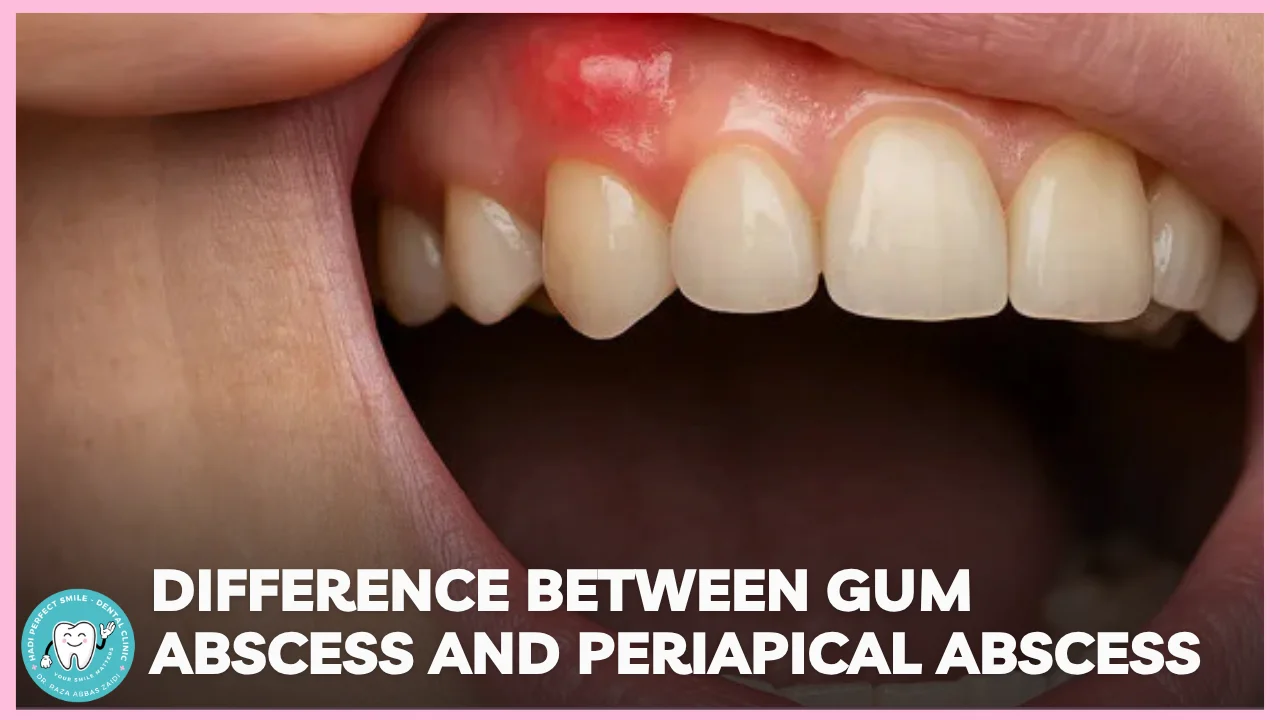
A gum abscess often produces noticeable swelling near the affected tooth.
Patients may experience:
- Localized gum swelling.
- Redness around the gums.
- Tenderness when touching the area.
- Pain while chewing.
- Pus discharge.
- Bad taste in the mouth.
- Bad breath.
The affected tooth may feel slightly elevated or loose due to surrounding inflammation.
Because the infection is closer to the gum surface, swelling is often more visible.
Symptoms of a Periapical Abscess
A periapical abscess tends to produce deeper, more intense pain.
Common symptoms include:
- Persistent throbbing toothache.
- Sensitivity to hot and cold foods.
- Pain when biting.
- Swelling near the root area.
- Facial swelling.
- Fever.
- Swollen lymph nodes.
- Tooth discoloration.
The pain often radiates to the jaw, ear, or neck.
Unlike gum abscesses, periapical abscesses frequently involve damage to the tooth pulp.
Appearance of the Swelling
The location of swelling can help distinguish between the two conditions.
In a gum abscess, swelling is usually located along the gum margin beside the tooth.
In a periapical abscess, swelling often develops near the root tip and may extend into the cheek or facial tissues.
However, professional diagnosis is still necessary because symptoms can overlap.
How Dentists Diagnose These Conditions
At Hadi Perfect Smile Dental Clinic, diagnosis begins with a detailed examination and discussion of symptoms.
The dentist evaluates:
- Location of pain.
- Gum condition.
- Tooth vitality.
- Presence of swelling.
- Dental history.
Dental X-rays are essential because they reveal bone loss, infection patterns, and the exact source of the abscess.
X-rays help determine whether the infection originates from the tooth root or the surrounding gums.
Complications of Untreated Gum Abscesses
Ignoring a gum abscess can result in serious consequences.
Possible complications include:
- Progression of gum disease.
- Bone loss around teeth.
- Tooth mobility.
- Tooth loss.
- Spread of infection.
The earlier treatment begins, the better the outcome.
Complications of Untreated Periapical Abscesses
A periapical abscess can become particularly dangerous if left untreated.
Potential complications include:
- Destruction of surrounding bone.
- Severe facial swelling.
- Spread of infection to adjacent tissues.
- Jaw infections.
- Systemic infection.
Prompt treatment is essential to prevent these serious health risks.
Treatment of a Gum Abscess
Treatment focuses on eliminating infection and improving gum health.
Common approaches include:
Drainage of the Abscess
Removing pus reduces pressure and pain.
Deep Cleaning
Scaling and root planing help remove bacteria and plaque below the gum line.
Antibiotic Therapy
Antibiotics may be prescribed when infection has spread.
Periodontal Treatment
Advanced gum disease may require specialized periodontal care.
At Hadi Perfect Smile, treatment plans are customized according to the severity of the condition.
Treatment of a Periapical Abscess
Because the infection originates inside the tooth, treatment usually targets the pulp and root canal system.
Root Canal Treatment
Root canal therapy removes infected pulp tissue and preserves the tooth.
Abscess Drainage
Drainage may be necessary when swelling is significant.
Antibiotics
Antibiotics help control infection when required.
Tooth Extraction
If the tooth cannot be saved, extraction may be recommended.
Our priority is always preserving the natural tooth whenever possible.
Prevention of Gum Abscesses
Preventing gum abscesses requires maintaining healthy gums.
Patients should:
- Brush twice daily.
- Floss regularly.
- Schedule professional cleanings.
- Avoid tobacco products.
- Treat gum disease promptly.
Healthy gums are the best defense against periodontal infections.
Prevention of Periapical Abscesses
Preventing periapical abscesses involves protecting teeth from decay and damage.
Important preventive measures include:
- Regular dental checkups.
- Early cavity treatment.
- Wearing mouthguards during sports.
- Good oral hygiene habits.
- Addressing tooth sensitivity promptly.
Routine dental care helps detect problems before infection develops.
Why Choose Hadi Perfect Smile for Abscess Treatment?
At Hadi Perfect Smile – Dental Clinic, we provide comprehensive diagnosis and treatment for all types of dental infections.
Under the leadership of Dr. Raza Abbas Zaidi, we offer:
- Emergency dental care.
- Digital dental X-rays.
- Root canal treatments.
- Gum disease management.
- Preventive dentistry.
- Personalized treatment planning.
Our goal is to relieve pain, eliminate infection, and preserve healthy smiles.
Clinic Details
📍 Address:
J-3/100-A, J- Extension, Near Anar Wali Masjid, Laxmi Nagar, Delhi – 110092
📞 Call Us:
+91-7011690245
📧 Email:
contact@hadiperfectsmile.in
🌐 Website:
www.hadiperfectsmile.in
Final Thoughts
Although gum abscesses and periapical abscesses may appear similar, they are distinct conditions with different causes and treatment requirements. A gum abscess begins in the supporting tissues around the tooth, while a periapical abscess starts inside the tooth and spreads to the root tip.
Recognizing the symptoms early and seeking professional care can prevent complications and improve treatment outcomes. Persistent pain, swelling, bad breath, or sensitivity should never be ignored.
At Hadi Perfect Smile Dental Clinic, we are committed to helping patients receive timely diagnosis and effective treatment for dental infections, ensuring long-term oral health and comfort.
Your Smile Matters.