Brushing and flossing are the two pillars of good oral hygiene. Yet, over the years, many myths and misconceptions have surrounded these basic dental care practices. From brushing harder for cleaner teeth to believing flossing is unnecessary, these myths can mislead patients and harm their oral health.
At Hadi Perfect Smile Dental Clinic, we believe that awareness is the first step toward prevention. In this blog, we will debunk the most common brushing and flossing dental myths, explain the truth behind them, and share the right practices for maintaining strong teeth and gums.
Myth 1: Brushing Harder Cleans Better
Many people think that brushing harder removes more plaque.
- Truth: Brushing too hard can actually wear down enamel, irritate gums, and cause sensitivity.
- Tip: Always use a soft-bristled brush and gentle circular motions for two minutes, twice daily.
Myth 2: You Only Need to Brush Once a Day
Some believe brushing once a day is enough.
- Truth: Plaque starts forming within hours, and bacteria thrive overnight.
- Tip: Brush at least twice daily – once in the morning and once before bed.
Myth 3: Flossing Isn’t Necessary if You Brush Well
A very common misconception is that brushing alone is sufficient.
- Truth: Toothbrushes can’t reach between teeth where food particles and plaque hide.
- Tip: Floss once daily to prevent cavities and gum disease in hard-to-reach areas.
Myth 4: Whitening Toothpaste Is Enough to Whiten Teeth
People often assume that whitening toothpaste gives professional results.
- Truth: Whitening toothpaste only removes surface stains; it cannot change natural tooth color or deep stains.
- Tip: For effective whitening, consult a dentist for professional treatments.
Myth 5: Electric Toothbrushes Damage Teeth
Some avoid electric toothbrushes due to fear of damage.
- Truth: When used properly, electric toothbrushes are safe and often more effective at removing plaque.
- Tip: Follow your dentist’s guidance to choose the right type of toothbrush.
Myth 6: Mouthwash Can Replace Brushing and Flossing
Many think using mouthwash is enough for oral hygiene.
- Truth: Mouthwash only freshens breath and reduces bacteria; it cannot remove plaque.
- Tip: Use mouthwash as an addition, not a replacement, to brushing and flossing.
Myth 7: Bleeding Gums Mean You Should Stop Flossing
Some stop flossing if gums bleed.
- Truth: Bleeding gums usually indicate plaque buildup or early gum disease.
- Tip: Continue flossing gently and consult your dentist if bleeding persists.
Myth 8: Sugar Is the Only Cause of Cavities
While sugar plays a role, it’s not the sole culprit.
- Truth: Any food that leaves particles behind (bread, chips, starches) can feed bacteria that produce cavity-causing acids.
- Tip: Maintain balanced oral hygiene, not just sugar avoidance.
Myth 9: Flossing Creates Gaps Between Teeth
Many people believe flossing weakens or widens gaps.
- Truth: Flossing, when done correctly, prevents plaque buildup and keeps teeth close and healthy.
- Tip: Use proper flossing techniques recommended by your dentist.
Myth 10: You Don’t Need to Replace Your Toothbrush Often
Some use the same toothbrush for months or even years.
- Truth: Worn-out bristles lose effectiveness and may harbor bacteria.
- Tip: Replace your toothbrush every 3 months or sooner if bristles fray.
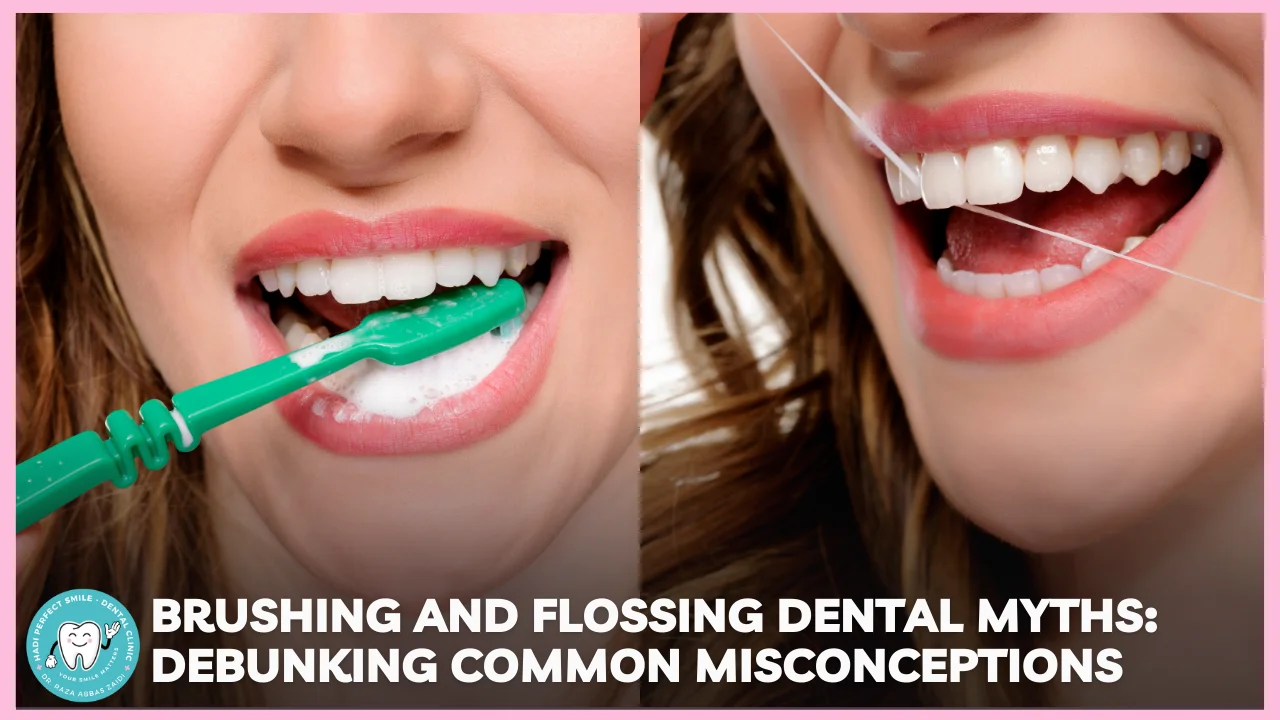
The Right Way to Brush
- Use a soft-bristled toothbrush.
- Hold it at a 45-degree angle to gums.
- Use gentle circular motions, not harsh scrubbing.
- Brush for two minutes, covering all surfaces.
- Don’t forget the tongue – bacteria hide there too!
The Right Way to Floss
- Take 18–24 inches of floss.
- Wrap ends around middle fingers, leaving 1–2 inches to work with.
- Gently glide between teeth using a “C” shape curve.
- Avoid snapping floss against gums to prevent injury.
Why Busting These Myths Matters
Believing in brushing and flossing dental myths can lead to:
- Gum disease
- Cavities
- Tooth sensitivity
- Bad breath
- Tooth loss in severe cases
Proper knowledge and practice can prevent these issues and ensure a lifetime of healthy smiles.
Expert Care at Hadi Perfect Smile Dental Clinic
At Hadi Perfect Smile – Dental Clinic, we focus on educating patients and providing top-quality preventive and corrective dental care. From professional cleanings to advanced gum treatments, we ensure your smile remains strong, healthy, and confident.
Conclusion
Brushing and flossing may seem simple, but doing them correctly and knowing the truth behind common myths is essential. By debunking these brushing and flossing dental myths, we empower you to take charge of your oral health.
At Hadi Perfect Smile Dental Clinic, we are here to guide you toward a healthier smile with the right techniques, tools, and treatments.
Remember: The key to oral health is not just brushing and flossing – it’s brushing and flossing the right way.