Early Warning Signs of a Tooth Abscess You Shouldn’t Ignore
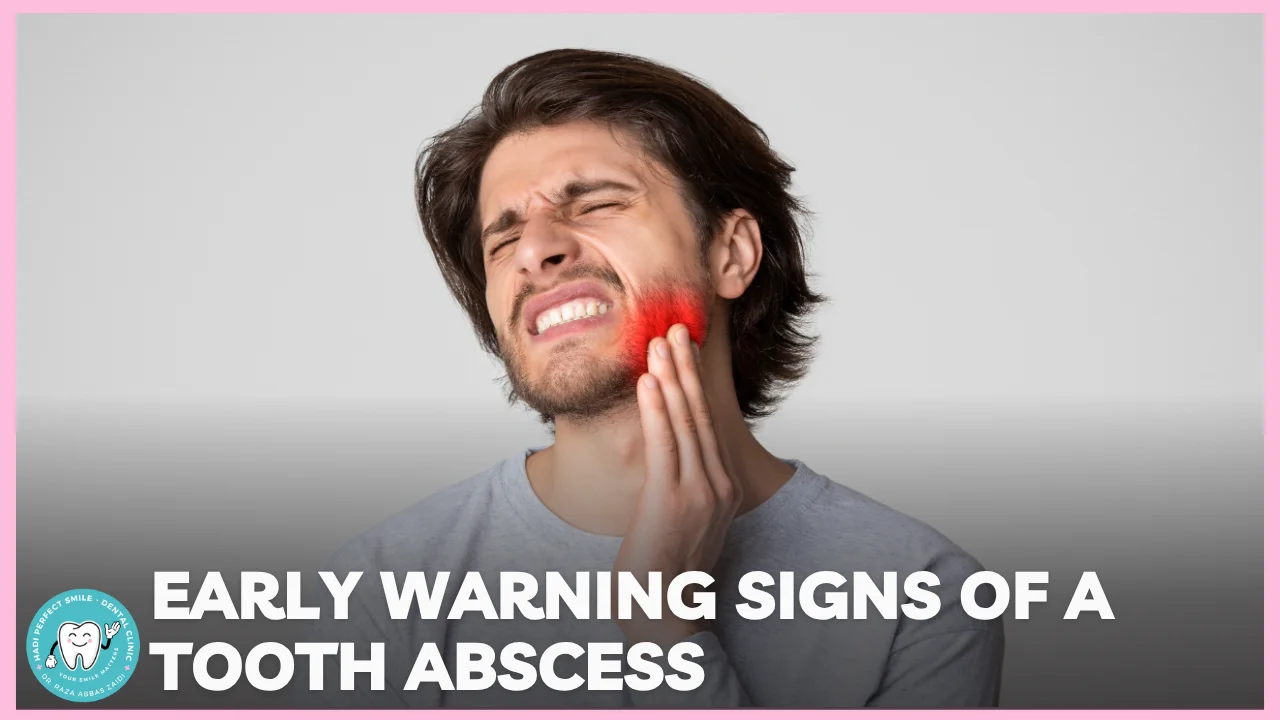
A toothache is often considered a minor inconvenience, something many people try to manage with home remedies or painkillers. However, not every toothache is harmless. Sometimes, it can be the first sign of a serious dental infection known as a tooth abscess. Ignoring the early warning signs can allow the infection to spread, leading to severe pain, swelling, and even serious health complications.
A tooth abscess is a pocket of pus caused by a bacterial infection. It can develop inside the tooth, in the gums, or around the root of a tooth. While the infection may start small, it rarely goes away on its own. Early diagnosis and treatment are essential to prevent permanent damage to your teeth and surrounding tissues.
At Hadi Perfect Smile – Dental Clinic, we regularly treat patients suffering from dental infections and abscesses. Under the expert guidance of Dr. Raza Abbas Zaidi (Dentist & Dental Surgeon), our goal is to identify dental problems early and provide effective treatment before they become emergencies.
In this blog, we will discuss the early warning signs of a tooth abscess, why they should never be ignored, and how timely treatment can protect your oral and overall health.
What Is a Tooth Abscess?
A tooth abscess is a collection of pus that develops when bacteria infect a tooth or the surrounding tissues. The infection usually begins when bacteria enter through a cavity, crack, damaged filling, or gum infection.
Once bacteria reach the inner layers of the tooth, they multiply and trigger an immune response. This leads to inflammation and the formation of pus. As pressure builds, the infection becomes painful and can spread to nearby tissues if left untreated.
There are different types of tooth abscesses:
- Periapical abscess: develops at the tip of a tooth root.
- Periodontal abscess: occurs in the gums beside a tooth.
- Gingival abscess: affects the gum tissue without involving the tooth root.
Regardless of the type, all dental abscesses require professional treatment.
Why Early Detection Is Important
One of the biggest mistakes patients make is waiting until the pain becomes unbearable before seeking treatment. A tooth abscess can continue to spread even when symptoms seem mild.
Early detection helps:
- Prevent severe pain.
- Save the natural tooth.
- Reduce treatment complexity.
- Lower treatment costs.
- Prevent infection from spreading.
Recognizing the warning signs can make a significant difference in treatment outcomes.
Early Warning Sign #1: Persistent Toothache
A persistent toothache is often the earliest symptom of a developing abscess.
Unlike temporary sensitivity, abscess-related pain usually:
- Lasts for an extended period.
- Becomes progressively worse.
- Feels throbbing or pulsating.
- Occurs without obvious triggers.
Many patients describe the pain as deep, intense, and difficult to ignore. If a toothache persists for more than a day or two, it should be evaluated by a dentist.
Early Warning Sign #2: Sensitivity to Hot and Cold
Occasional sensitivity is common, but prolonged discomfort after consuming hot coffee, tea, cold drinks, or ice cream can indicate infection.
When bacteria reach the pulp inside the tooth, the nerves become inflamed and highly sensitive. If the pain lingers after the temperature stimulus is removed, it may signal a developing abscess.
This type of sensitivity should never be ignored, especially when combined with other symptoms.
Early Warning Sign #3: Pain While Chewing or Biting
A healthy tooth should allow you to chew comfortably. When an abscess forms, pressure around the tooth root increases.
As a result, patients may experience:
- Sharp pain while biting.
- Tenderness when chewing.
- Discomfort when touching the affected tooth.
This symptom often indicates that the infection has extended beyond the pulp and into the surrounding tissues.
Early Warning Sign #4: Swollen Gums
Swelling around a tooth is a common sign of infection.
The gum tissue may appear:
- Red.
- Inflamed.
- Puffy.
- Tender to touch.
Sometimes a small bump resembling a pimple develops on the gums. This bump may contain pus and is often referred to as a gum boil or fistula.
The presence of swelling is a clear indication that professional dental care is needed.
Early Warning Sign #5: Bad Breath That Doesn’t Go Away
Persistent bad breath, also known as halitosis, may be a sign of an underlying infection.
When bacteria multiply inside an abscess, they produce unpleasant-smelling compounds. Even with regular brushing and mouthwash, the odor often persists.
Some patients also report a foul taste in their mouth caused by drainage from the abscess.
If bad breath continues despite good oral hygiene, it may be time for a dental examination.
Early Warning Sign #6: Tooth Discoloration
An infected tooth may gradually become darker than surrounding teeth.
The tooth may appear:
- Gray.
- Brown.
- Yellowish.
This discoloration often occurs when the pulp inside the tooth begins to die due to infection.
Tooth discoloration accompanied by pain or sensitivity should always be evaluated promptly.
Early Warning Sign #7: Facial Swelling
As the infection spreads, swelling may extend beyond the gums and affect the face.
You may notice:
- Swelling in the cheek.
- Puffiness around the jaw.
- Facial asymmetry.
Facial swelling is a serious sign that the infection is progressing and requires immediate dental attention.
Early Warning Sign #8: Swollen Lymph Nodes
The body’s immune system responds to infection by activating nearby lymph nodes.
Patients with a dental abscess may notice:
- Tenderness under the jaw.
- Swollen lymph nodes in the neck.
This symptom suggests the body is actively fighting infection and should not be ignored.
Early Warning Sign #9: Fever and Fatigue
A fever often indicates that the infection has become more widespread.
Common symptoms include:
- Elevated body temperature.
- Fatigue.
- Weakness.
- General feeling of illness.
When a tooth abscess causes fever, urgent treatment is necessary to prevent further complications.
Early Warning Sign #10: Difficulty Opening the Mouth
In advanced cases, inflammation may affect surrounding muscles and tissues.
Patients may experience:
- Jaw stiffness.
- Difficulty opening the mouth fully.
- Pain when speaking or eating.
This condition can significantly affect daily activities and requires prompt dental care.
What Causes a Tooth Abscess?
Several factors increase the risk of developing a tooth abscess.
The most common cause is untreated tooth decay. Cavities create openings that allow bacteria to enter the inner layers of the tooth.
Other causes include:
- Cracked or fractured teeth.
- Gum disease.
- Poor oral hygiene.
- Dental trauma.
- Failed dental restorations.
At Hadi Perfect Smile Dental Clinic, identifying the underlying cause is an important part of treatment planning.
What Happens If a Tooth Abscess Is Ignored?
Ignoring a tooth abscess can have serious consequences.
The infection may:
- Destroy surrounding bone.
- Damage nearby teeth.
- Spread to the jaw.
- Affect facial tissues.
- Enter the bloodstream.
In severe cases, untreated dental infections can become life-threatening.
Prompt treatment is always the safest option.
How Is a Tooth Abscess Diagnosed?
Diagnosis begins with a clinical examination and discussion of symptoms.
The dentist may:
- Examine the tooth and gums.
- Check for swelling and tenderness.
- Perform sensitivity tests.
- Take dental X-rays.
X-rays help determine the location and extent of the infection.
At Hadi Perfect Smile, advanced diagnostic tools allow accurate and timely diagnosis.
Treatment Options for a Tooth Abscess
Treatment focuses on eliminating infection and preserving the natural tooth whenever possible.
Root Canal Treatment
A root canal removes infected tissue from inside the tooth and seals it to prevent reinfection.
Abscess Drainage
Draining pus helps reduce pressure and relieve pain.
Antibiotics
Antibiotics may be prescribed when the infection has spread or when swelling is significant.
Tooth Extraction
If the tooth cannot be saved, extraction may be necessary to prevent further spread of infection.
How to Prevent a Tooth Abscess
Prevention begins with good oral hygiene and regular dental visits.
Simple preventive measures include:
- Brushing twice daily with fluoride toothpaste.
- Flossing every day.
- Limiting sugary foods and drinks.
- Treating cavities early.
- Visiting the dentist every six months.
Preventive care is always easier and more affordable than treating an abscess.
Why Choose Hadi Perfect Smile for Tooth Abscess Treatment?
At Hadi Perfect Smile – Dental Clinic, we provide comprehensive dental care with a focus on early diagnosis and patient comfort.
Under Dr. Raza Abbas Zaidi, we offer:
- Emergency dental care.
- Digital dental imaging.
- Root canal treatments.
- Preventive dentistry.
- Personalized treatment plans.
Our goal is to relieve pain, eliminate infection, and help patients maintain healthy smiles.
Clinic Details
📍 Address:
J-3/100-A, J- Extension, Near Anar Wali Masjid, Laxmi Nagar, Delhi – 110092
📞 Call Us:
+91-7011690245
📧 Email:
contact@hadiperfectsmile.in
🌐 Website:
www.hadiperfectsmile.in
Final Thoughts
A tooth abscess is not something that should be ignored or treated solely with home remedies. The earlier the infection is detected, the easier it is to treat and the greater the chance of saving the affected tooth.
Persistent tooth pain, swelling, sensitivity, bad breath, or facial swelling are all warning signs that deserve professional attention. Seeking prompt dental care can prevent complications and restore oral health.
At Hadi Perfect Smile Dental Clinic, we are committed to helping patients recognize dental problems early and receive the care they need for a healthy, pain-free smile.
Your Smile Matters.