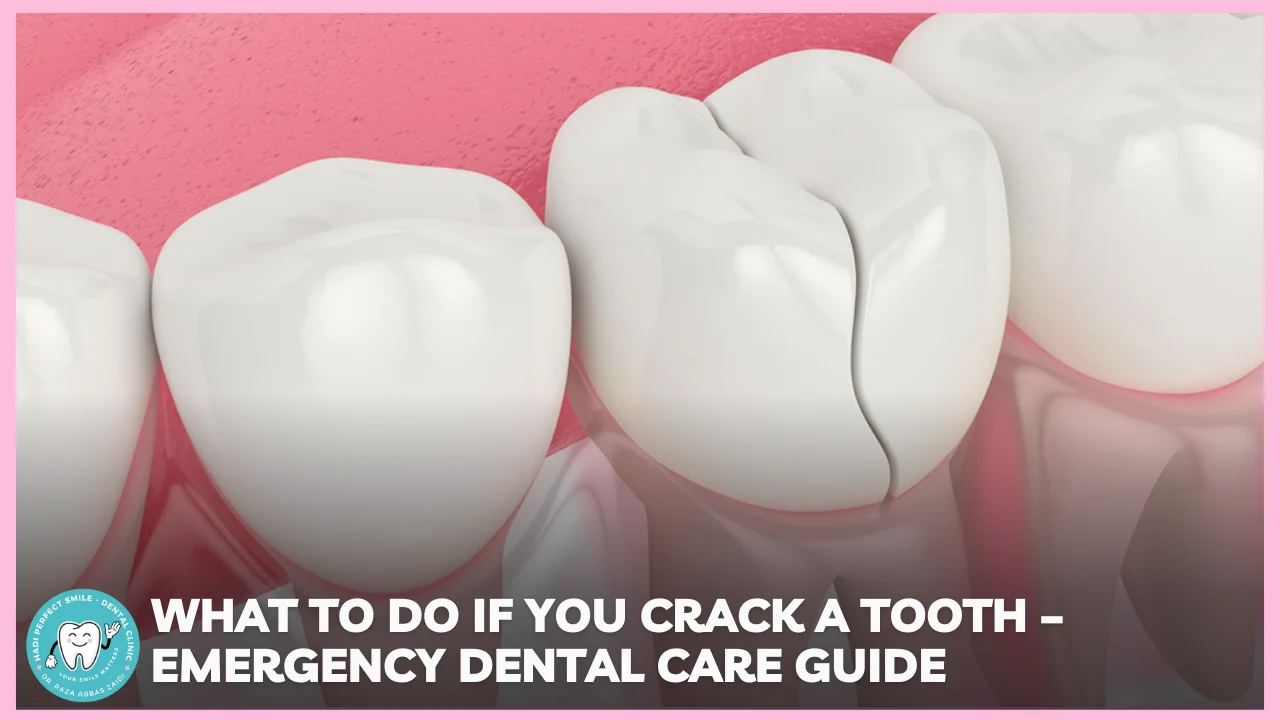
Cracking a tooth can be alarming. Whether it happens while eating something hard, during a fall, or from nighttime grinding, a cracked tooth is always a dental emergency—no matter how small it may seem. Without proper care, a crack can worsen, cause severe pain, or even lead to tooth loss.
This comprehensive guide explains:
- How to identify a cracked tooth
- What to do immediately after a tooth cracks
- The different types of cracks
- Professional treatments
- How to manage pain
- Preventive measures to protect your teeth
- When you should go to the dentist (hint: ASAP!)
If you or someone you know has cracked a tooth, this guide will tell you exactly what to do next—step by step.
📌 Understanding a Cracked Tooth: Why It Happens
A cracked tooth occurs when the enamel and dentin experience stress beyond their strength. Tooth enamel is strong—but it’s not indestructible.
Common Causes of Cracked Teeth
- Biting on hard foods (ice, nuts, bones, hard candy)
- Trauma from accidents, sports injuries, or falls
- Teeth grinding (bruxism)
- Abrupt temperature changes (hot tea followed by cold water)
- Aging and natural weakening
- Large, old fillings that weaken tooth structure
- Using teeth as tools (opening bottle caps, plastic wrappers)
Once a tooth cracks, it cannot heal on its own. The crack must be treated professionally to prevent worsening.
⭐ Symptoms of a Cracked Tooth
Not all cracks are visible. Sometimes symptoms are the only clue.
Common signs include:
- Sharp pain while chewing or biting
- Sensitivity to hot, cold, or sweet items
- Intermittent pain (comes and goes)
- Feeling pressure on the tooth
- Swelling around the gum
- A visible line or fracture
- Roughness when you run your tongue over the tooth
If you experience these symptoms—even without visible damage—it may still be a cracked tooth.
🚨 What to Do Immediately If You Crack a Tooth (First Aid Steps)
A cracked tooth requires urgent attention. Follow these steps immediately:
1. Rinse Your Mouth With Warm Water
This helps clean the area and remove food particles.
2. Check for Bleeding
If gums are bleeding:
- Apply gentle pressure with clean gauze
- Hold for 10–15 minutes
3. Apply a Cold Compress
Place it on your cheek to:
- Reduce swelling
- Minimize pain
- Control bruising
Do NOT apply ice directly to the tooth.
4. Save Any Broken Pieces
If part of the tooth chipped off:
- Rinse the fragment with clean water
- Store it in milk or saline
- Carry it to your dentist
Sometimes, dentists can bond it back.
5. Avoid Chewing on That Side
Chewing increases pressure and may spread the crack.
6. Cover Sharp Edges (If Necessary)
To prevent tongue or cheek cuts:
- Use sugar-free gum
- Or apply dental wax (if available)
Never use glue or adhesive of any kind.
7. Take Over-the-Counter Pain Relievers
Ibuprofen or paracetamol can help manage pain.
Avoid aspirin—it can increase bleeding.
8. Avoid Hot or Cold Foods
Temperature extremes worsen sensitivity.
9. Visit Your Dentist Immediately
A cracked tooth is a TIME-SENSITIVE dental emergency.
Early treatment prevents:
- infection
- deeper cracks
- tooth fracture
- root damage
- eventual tooth loss
🧷 Types of Tooth Cracks and Their Treatment
Different cracks require different treatments. Here are the most common types:
1️⃣ Craze Lines (Minor Surface Cracks)
Tiny, superficial cracks affecting only enamel.
Symptoms:
- No pain
- Cosmetic concern only
Treatment:
- Polishing
- Cosmetic bonding
- Safe to monitor
2️⃣ Fractured Cusp
Crack on the chewing surface, often around a filling.
Symptoms:
- Pain while chewing
- Visible piece may break off
Treatment:
- Dental filling
- Onlay
- Crown
3️⃣ Cracked Tooth
Crack runs vertically toward the gum line, but not below it.
Symptoms:
- Intermittent pain
- Chewing discomfort
- Sensitivity
Treatment:
- Crown
- Root canal therapy (if pulp is damaged)
- Early treatment prevents split tooth
4️⃣ Split Tooth
Crack splits the tooth into two parts.
Symptoms:
- Severe pain
- Piece moves independently
Treatment:
- Root canal
- Crown
- Extraction (in some cases)
5️⃣ Vertical Root Fracture
Crack begins at the root and moves outward.
Symptoms:
- Mild or no pain
- Gum swelling
- Often found during routine X-rays
Treatment:
- Root canal retreatment
- Extraction (if severe)
🦷 Professional Treatments for a Cracked Tooth
Your dentist may recommend one of the following:
1. Bonding
Tooth-colored composite resin fills and seals minor cracks.
2. Dental Crown
A strong cap placed over the tooth to protect it.
Best for:
- large cracks
- fractured cusps
- cracked teeth
Crowns prevent the crack from spreading.
3. Root Canal Treatment
Required when the crack reaches the pulp.
This:
- removes infection
- relieves pain
- saves the tooth
4. Veneers
Used for front teeth with cosmetic cracks.
5. Extraction
Used only when:
- crack extends deep into the root
- tooth cannot be saved
The dentist may replace it with:
- dental implant
- bridge
- removable denture
🔥 How to Relieve Pain Until You See a Dentist
If immediate dental care is not available:
- Use warm saltwater rinses
- Take OTC painkillers
- Apply cold compress
- Avoid extreme temperatures
- Avoid chewing on the cracked side
- Maintain soft-food diet (soups, yogurt, mashed foods)
Never apply clove oil directly—it may irritate tissues.
🛑 What NOT to Do If You Crack a Tooth
- ❌ Don’t chew on hard foods
- ❌ Don’t ignore pain
- ❌ Don’t try to repair the tooth at home
- ❌ Don’t apply heat to the area
- ❌ Don’t use super glue
- ❌ Don’t delay dental visit
Delays increase risk of infection and tooth loss.
🛡️ How to Prevent Cracked Teeth in the Future
✔ Avoid chewing hard foods
Ice, bones, popcorn kernels, and hard candies.
✔ Stop using teeth as tools
Never open packages or bite fingernails.
✔ Wear a mouthguard
For:
- sports
- grinding teeth during sleep
✔ Manage teeth grinding (Bruxism)
Use:
- night guard
- stress-relief techniques
✔ Maintain dental hygiene
Weak teeth crack easily.
✔ Get regular dental check-ups
Early detection saves teeth.
🧪 Why Early Treatment Is Critical
A small crack can quickly worsen due to:
- chewing pressure
- temperature changes
- bacterial invasion
- time
With early treatment, you can save the tooth using simple procedures like bonding or a crown. But delay can lead to:
- infection
- nerve damage
- root fracture
- tooth extraction
⭐ Conclusion: Cracked Tooth? Act Fast to Save Your Smile
A cracked tooth is a common but serious dental emergency. Whether the crack is small or severe, the most important step is to visit your dentist as soon as possible. The sooner it’s treated, the greater the chance of saving the tooth.
Taking immediate action—cleaning, protecting, avoiding chewing, and seeking dental care—can prevent complications and preserve your natural tooth. With the right treatment and preventive habits, you can maintain a strong, healthy smile for life.